For Schools
Introduction
 Catholic
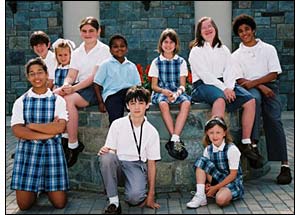
high schools and Parish schools across the United States of America
are responding to the call to welcome persons with disabilities in all
aspects of Church life. This growing trend is allowing more students
with developmental disabilities than ever before to enroll in Catholic
schools alongside their siblings and peers.
Catholic
high schools and Parish schools across the United States of America
are responding to the call to welcome persons with disabilities in all
aspects of Church life. This growing trend is allowing more students
with developmental disabilities than ever before to enroll in Catholic
schools alongside their siblings and peers.
Catholic High Schools in our region and across the nation are successfully incorporating students with disabilities into their schools, including those schools that strive to maintain a rigorous college prep curriculum. Furthermore, welcoming students with disabilities into the school is leading to impressive benefits, not only for those persons with disabilities, but for the faculty, staff, and other students who befriend and support them.
A number of years ago, programs for students with learning disabilities were created in area Catholic high schools. The schools acknowledged that there was a need to serve these students and, thanks to the hard work of administrators and parents, several programs now exist to serve students with learning disabilities. Those Catholic schools responded to the call then and CCSE, Inc. urges you to respond to the call now, by opening your doors to a small group of students with disabilities. The teachings of our faith challenge us to continuously strive for progress in the lives of all the faithful. CCSE, Inc. invites you to join them on this path towards providing hope, possibility and change.
Benefits
- Students with disabilities can attend
school with their siblings and peers.
Students with disabilities will thrive in an environment that welcomes them and celebrates their spirit and gifts. They will benefit spiritually, academically and socially from being with age appropriate peers in a nurturing, close knit community. - Teaches ALL children important lessons
about life, and about parenting.
Studies have consistently shown that a person’s ability to parent a child with special needs is directly influenced by prior experiences with people with special needs. Therefore, children who have positive interactions with peers who have special needs will be better prepared to parent their own children one day. They will also be better prepared to handle the demands placed on caregivers who provide daily assistance to a disabled spouse or elderly relative. - Academic benefits for all students.
- The special education teacher may consult with the regular education teacher to better serve students who may be struggling in school.
- Research indicates that typically developing students derive academic benefits from their involvement and relationships with students with disabilities. The presence of students with disabilities in the general education classroom provides a catalyst for learning opportunities and experiences that might not otherwise be part of the curriculum.
- Positive group dynamics.
Including students with disabilities creates a more diverse group and exposes all students to a wider variety of personalities, interests and abilities. This in turn tends to promote a more open, accepting social environment. One of the benefits of this experience can be a decrease in teasing and bullying among the entire student body. - Increased interest in pursing careers
serving persons with disabilities.
Students’ experiences with peers with disabilities will foster greater interest in pursuing studies and careers in special education and other disabilities-related professions. - Your school as a Witness.
In opening your doors to students with disabilities you will serve as a leader and teacher of the principles of social justice to your students, your community and all the faithful. Your example will lead to contemplation and further action by other schools.
Apply for a Grant
If your Catholic school is located in Washington, D.C. or Maryland and is considering expanding or creating a program to enroll two or more students with developmental/intellectual disabilities who would benefit academically and spiritually from qualified special education instruction CCSE invites you to submit a proposal. Funds from CCSE can be applied to hiring special education staff and to purchasing materials necessary to provide appropriate accommodations and adaptations to the curriculum.
›› Read our letter to schools announcing the opening of this year’s grant process.
CCSE will also consider unique requests not otherwise anticipated but which meet CCSE objectives. Please submit a Letter of Intent/Inquiry (for preferred format, see the Washington Grantmakers Common Grant Letter of Intent). Upon receipt of your Letter of Intent/Inquiry CCSE will send you a complete Request for Funding Application (RFA). Should you have any questions whatsoever about this process, please do not hesitate to contact us. CCSE wishes to support as many schools as possible. There is no deadline.
CCSE does not provide long term continuing program support and requests for renewed support are considered on the basis of reports received, site visits and CCSE priorities. A negative response does not reflect upon the merits of a proposal or the quality of an organization, but results from the fact that the number of proposals received far exceeds CCSE's resources, or because a given project does not fall within CCSE piority areas of involvement.
Apply for Technical Assistance
Below please find an application to participate in our TA outreach.
CCSE will fund a limited number of technical assistance seed visits
in Washington, D.C. and Maryland with the objective of promoting and
facilitating the implementation of special education instruction.
Preference will be given to schools that already have a special educator
on staff, that are considering expanding or creating new special education
services or that have or will enroll two or more students with developmental/intellectual
disabilities who would benefit academically and spiritually from qualified
instruction in a Catholic school setting. CCSE will also consider unique
requests not otherwise anticipated but which meet CCSE objectives. There
is no deadline.
Technical Assistance may consist of:
- Raising disability awareness among administrators, department chairs, faculty, members of the board of trustees, parents, student council and student body through specifically targeted programs to include renowned speakers and other special guests from the special education and Catholic community. Educating the entire community is essential to removing barriers created by fears, biases and myths. This will ensure that everyone understands the importance of welcoming students with disabilities and is a key factor in the success of programs serving students with special needs.
- Support in establishing a peer mentoring program and social skills group for students with special needs
- Guidance in establishing and designing a new program specifically tailored to the students’ needs and designing a daily schedule
- Guidance in creating policies on grading, behavior standards, granting a diploma or Certificate of Completion. The Options Program at Paul VI High School in Fairfax, VA. could serve as a model and public school policies and practices could also serve as guidelines
- Guidance in hiring special education professionals
- Defining the Admissions process, reviewing IEP’s and educational reports as well as tracking students progress and identifying potential needs
- Assistance in implementing appropriate modifications and accommodations
- In-Service training and site visits to other Catholic schools and non-public schools serving students with disabilities
- Developing co-teaching and collaborative teaching strategies
- Assistance throughout the year to address specific
challenges or concerns as they may arise, as needed
For more information please contact:
CCSE, Inc.
(301) 933-8844 or grants@ccse-maryland.org
3750 University Blvd. W. Suite 203
Kensington, MD 20895
Save the Date
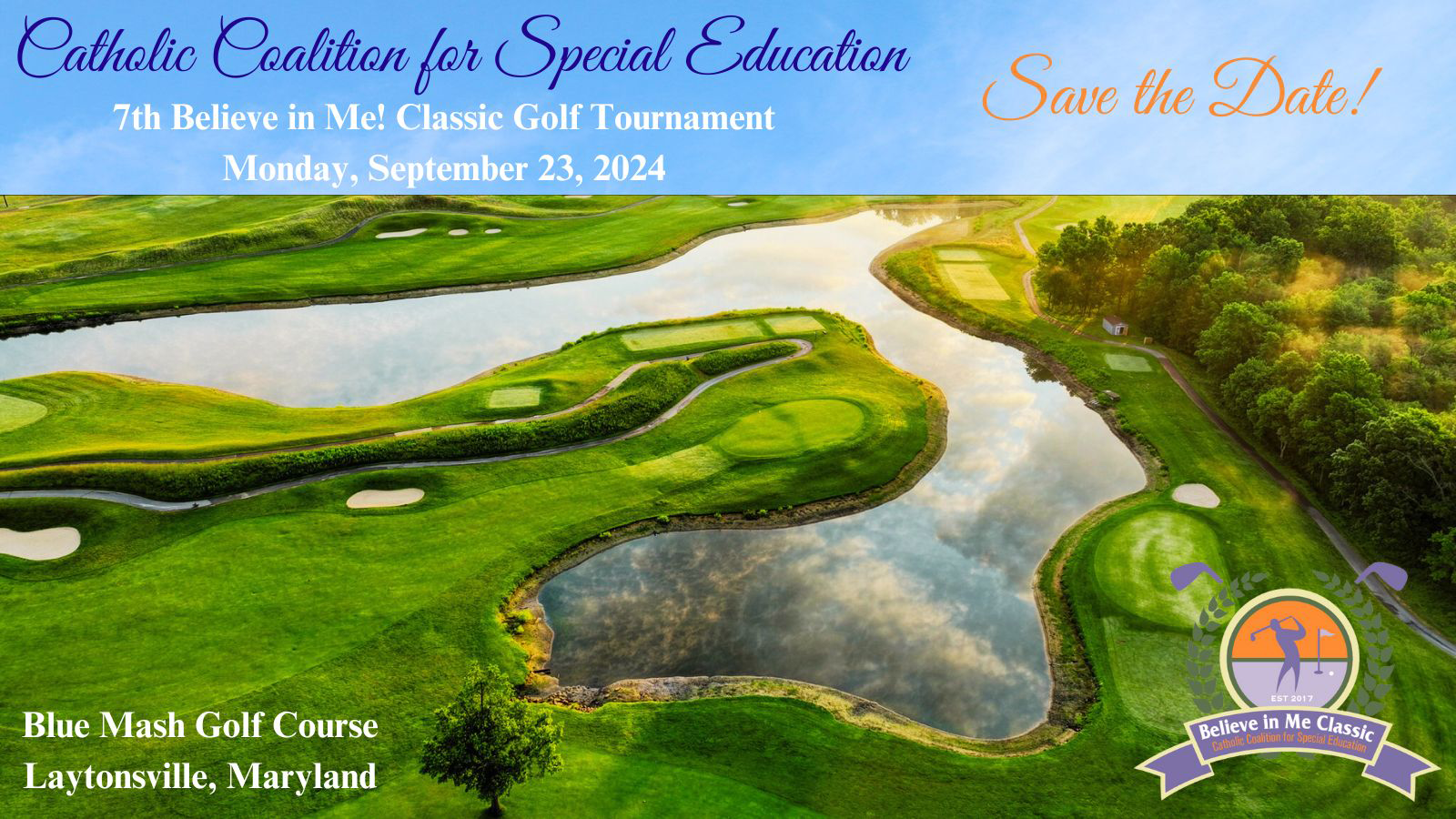
7th Believe in Me!
Classic Golf Tournament
Monday, September 23, 2024

VIDEOS
- 2022 Spring Benefit – We Can’t Wait
- 2021 CCSE Virtual Spring Benefit
- 2021 Pre Show Spring Benefit
- Opening Doors – Building Inclusive Education
- Honoring our Trailblazing Partner Schools
- More Videos




We gratefully acknowledge
Fitzgerald Auto Malls
as a CCSE Corporate Partner
